

Article
Why Antibiotic Sensitivity Testing Matters on Modern Poultry Farms
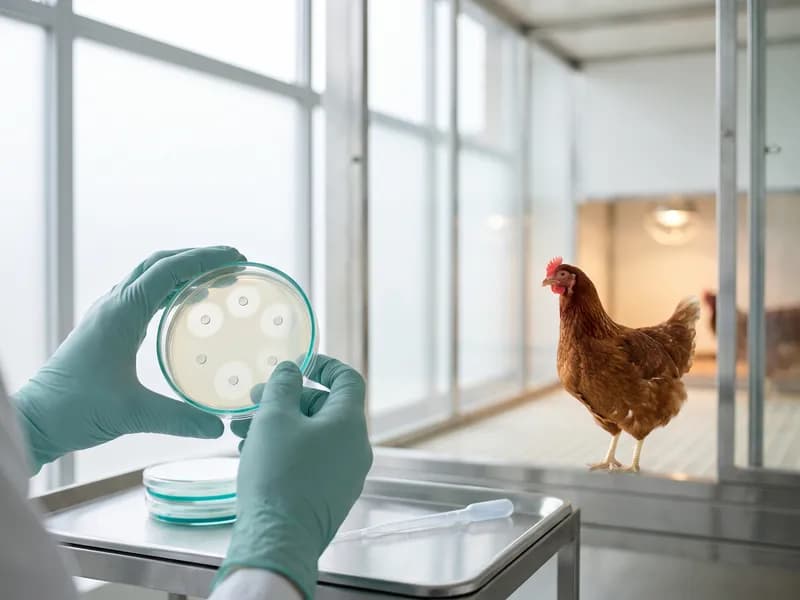
For decades, treating a bacterial outbreak on a poultry farm meant reaching for a familiar antibiotic and hoping it worked. Today that approach is increasingly unreliable — and increasingly expensive. Antibiotic sensitivity testing replaces guesswork with evidence, telling you exactly which molecule will clear an infection before you dose a single bird.
Why empirical treatment is losing ground
Bacterial populations change. A Salmonella or E. coli strain that responded to a given antibiotic two years ago may now shrug it off entirely, because resistance genes spread quickly through intensive production environments.
When an empirical treatment fails, the cost is rarely just the wasted medication. It includes lost days of growth, continued mortality, a second course of a different drug, and the residues and withdrawal periods that come with over-treatment.
What a sensitivity panel actually measures
A sensitivity panel exposes the specific pathogen isolated from your flock to a range of antibiotics under controlled laboratory conditions. The result is a clear map of which drugs inhibit the organism, at what concentration, and which have no effect at all.
This turns a treatment decision into a targeted one: the veterinarian selects a molecule the pathogen is proven susceptible to, at a dose grounded in measured values rather than habit.
From data to a healthier flock
Used routinely, sensitivity testing does more than resolve individual outbreaks. It builds a picture of resistance trends on your farm over time, informing smarter rotation, more precise prevention and a measurable reduction in total antibiotic use.
That reduction matters commercially and ethically: lower drug costs, cleaner residue profiles and a direct contribution to slowing antimicrobial resistance across the industry.
Key takeaways
- Empirical antibiotic use fails more often as resistance spreads.
- Sensitivity panels identify the exact drug and dose that will work.
- Targeted treatment cuts wasted medication, mortality and withdrawal issues.
- Routine testing reveals farm-level resistance trends and lowers total antibiotic use.

Need Diagnostics for Your Farm?
Send us your samples and our specialists will identify the pathogen, test treatment options and return an actionable report — usually within 48 hours.