

Molecular Genetics Laboratory
Our molecular genetics laboratory sees what classical methods cannot: pathogens before clinical signs, the exact strain behind an outbreak, and how well your vaccines match the field — through PCR, qPCR and sequencing.
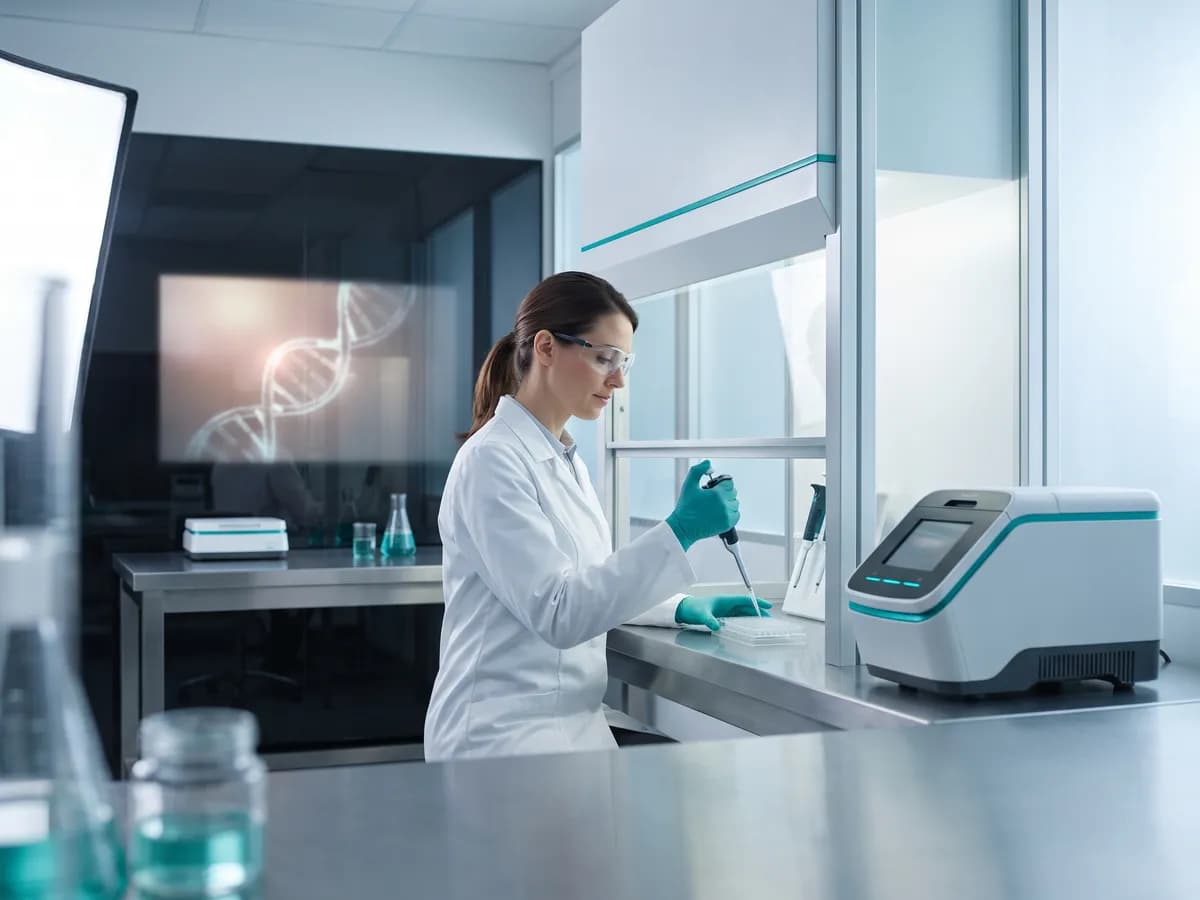
What the Laboratory Does
Six molecular services bring precision diagnostics and genetic insight directly to your production decisions.
PCR & qPCR Diagnostics
Rapid, sensitive detection of viral and bacterial pathogens — avian influenza, Newcastle disease, IBV, mycoplasma and more.
Genotyping & Strain Typing
Characterize field strains to track variants and compare them with vaccine strains.
Sequencing & Epidemiology
Sequencing-based tracing of disease outbreaks across flocks and regions.
Genetic Monitoring of Breeding Stock
Screening of parent stock for hereditary traits and pathogen-free status.
Vaccine Match Assessment
Molecular comparison of field isolates with vaccine strains to optimize vaccination programs.
Environmental & Vector Screening
Molecular detection of pathogens in vectors, litter and environmental samples.
From Sample to Answer
Sample Reception
Samples are registered under contamination-controlled conditions.
Nucleic Acid Extraction
DNA and RNA are purified from clinical and environmental material.
Amplification (PCR/qPCR)
Target pathogen sequences are amplified with validated assays.
Analysis & Sequencing
Results are analyzed and, where needed, strains are sequenced.
Interpretation & Report
Specialists translate molecular findings into practical guidance.
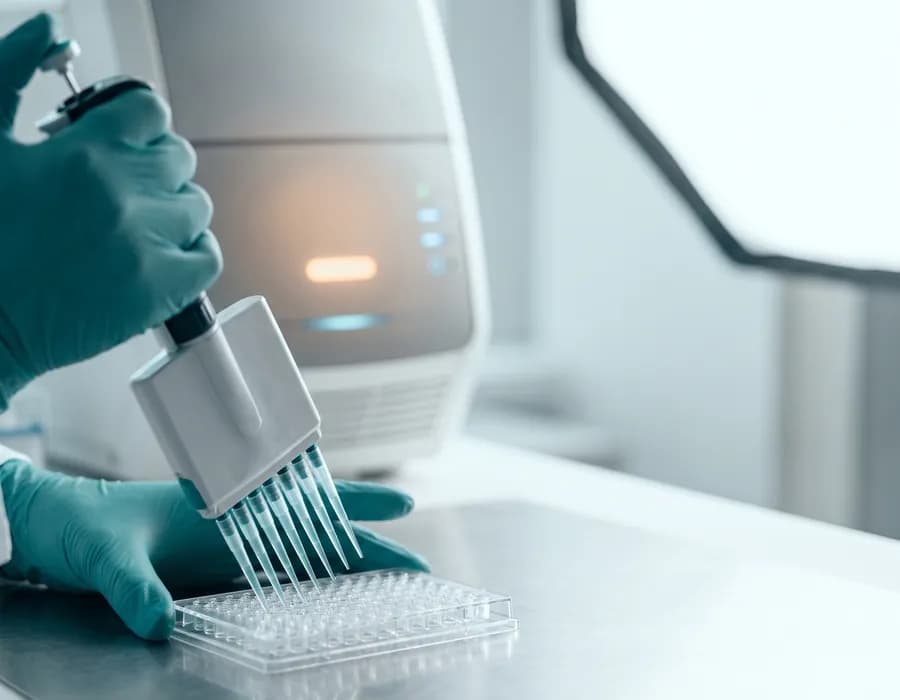
Precision Molecular Diagnostics.
Molecular work demands discipline: validated assays, physically separated clean zones and rigorous controls at every stage. Our laboratory delivers dependable results fast — sequencing included — interpreted by specialists in veterinary genetics.
- Validated PCR/qPCR assays
- Contamination-controlled clean zones
- Same-week sequencing turnaround
- Expert genetic interpretation

Need Diagnostics for Your Farm?
Send us your samples and our specialists will identify the pathogen, test treatment options and return an actionable report — usually within 48 hours.