Article
Antimicrobial Resistance: A Shared Responsibility in Animal Husbandry
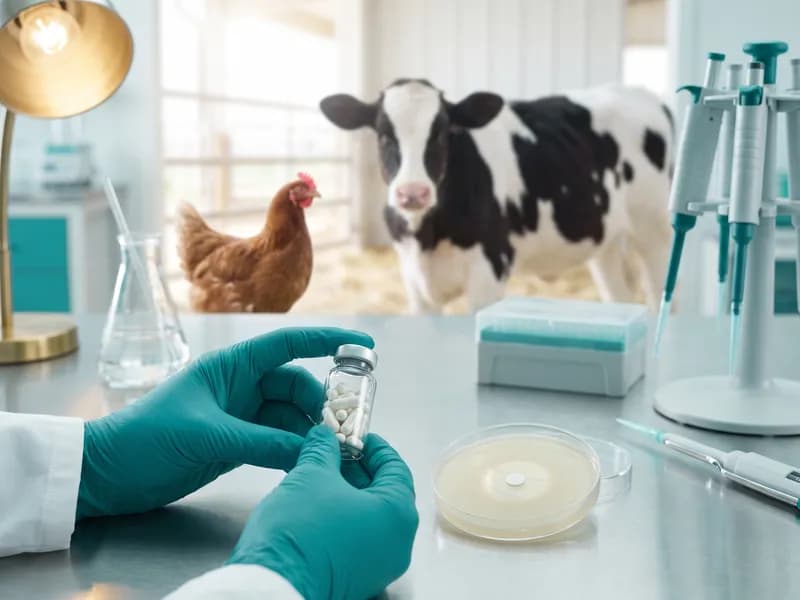
Antimicrobial resistance is not a problem any single farm can solve — and not one any single farm can ignore. Every treatment decision, on every operation, adds to or subtracts from a shared pool of effectiveness. Responsible production means treating antibiotics as the finite, collective resource they are.
Why AMR is a collective challenge
Resistance genes move between bacteria, between animals and between farms. An over-treated outbreak in one operation can erode the effectiveness of the same drug for everyone else.
That interconnection means the solution cannot be purely individual; it has to be a shared standard of practice across the industry.
The toolkit of responsible use
Three tools work together: diagnostics-guided treatment that uses the right drug only when needed, vaccination that prevents disease before it starts, and biosecurity that keeps pathogens out altogether.
Used consistently, they reduce the total volume of antibiotics without compromising animal health or productivity.
A commercial case, not just an ethical one
Reducing reliance on antibiotics lowers direct costs, improves residue and withdrawal profiles, and increasingly aligns with market and regulatory expectations across the EAEU and beyond.
Responsible use is therefore not a constraint on productive farming — it is part of what keeps it productive for the long term.
Key takeaways
- Resistance genes spread between bacteria, animals and farms.
- No single farm can solve AMR alone — it needs shared standards.
- Diagnostics, vaccination and biosecurity together cut antibiotic use.
- Responsible use lowers costs and meets market and regulatory expectations.

Need Diagnostics for Your Farm?
Send us your samples and our specialists will identify the pathogen, test treatment options and return an actionable report — usually within 48 hours.