Article
From Sample to Solution: Inside a Veterinary Diagnostic Workflow
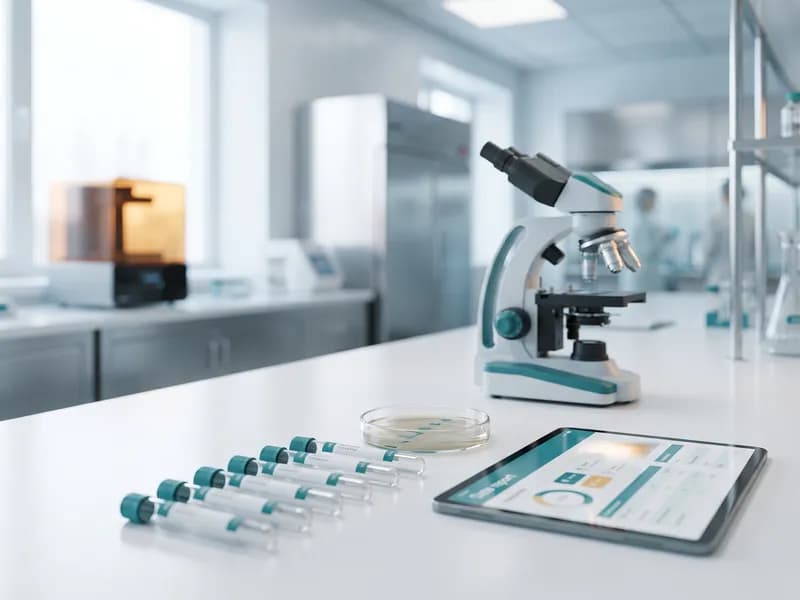
A sample leaves your farm in a cool box and, a few days later, a report arrives that can reshape your entire health program. What happens in between is a disciplined chain of steps, each designed to protect the integrity of the answer. Here is that journey, from reception to recommendation.
Reception and registration
Every sample is logged, checked for integrity and assigned a tracking code the moment it arrives. Temperature, packaging and timing are all recorded, because a compromised sample can quietly distort everything that follows.
This traceability means that at any point the laboratory — and you — can see exactly where a sample is in the process.
Culturing, extraction and identification
Depending on the question, the sample is either cultured on selective media or has its nucleic acid extracted for molecular analysis. Bacterial colonies are identified biochemically; genetic material is amplified and read.
This is where a vague concern — 'something is wrong with the flock' — becomes a specific, named pathogen.
Interpretation and the report
Raw results are not the deliverable. A veterinary specialist interprets them against your production context, separating significant findings from noise and translating the science into a clear course of action.
The report that reaches your veterinarian is therefore not just data — it is a decision, with treatment and prevention guidance you can implement immediately.
Key takeaways
- Traceability starts at reception and protects the whole result.
- Culture and molecular methods turn a vague concern into a named pathogen.
- Specialists interpret results against your production context.
- The final report is an actionable decision, not raw data.
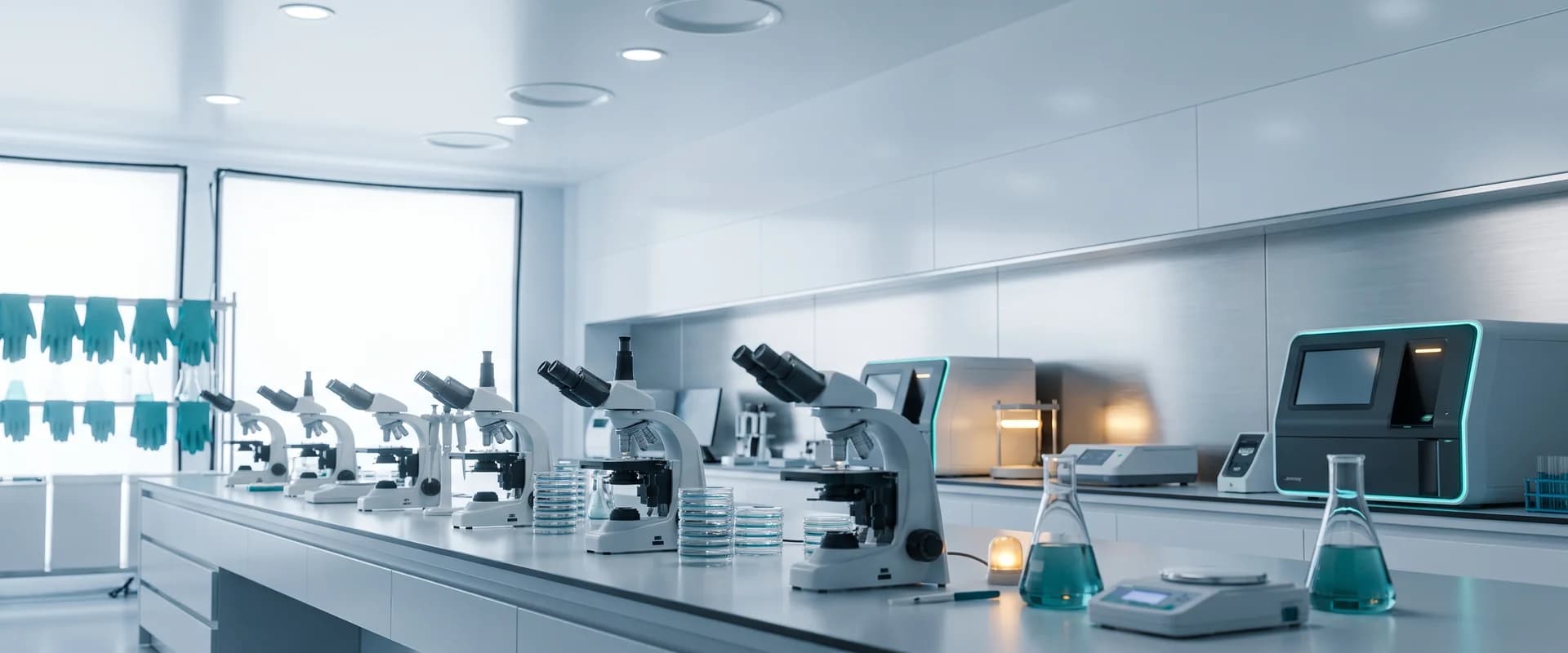
Need Diagnostics for Your Farm?
Send us your samples and our specialists will identify the pathogen, test treatment options and return an actionable report — usually within 48 hours.